
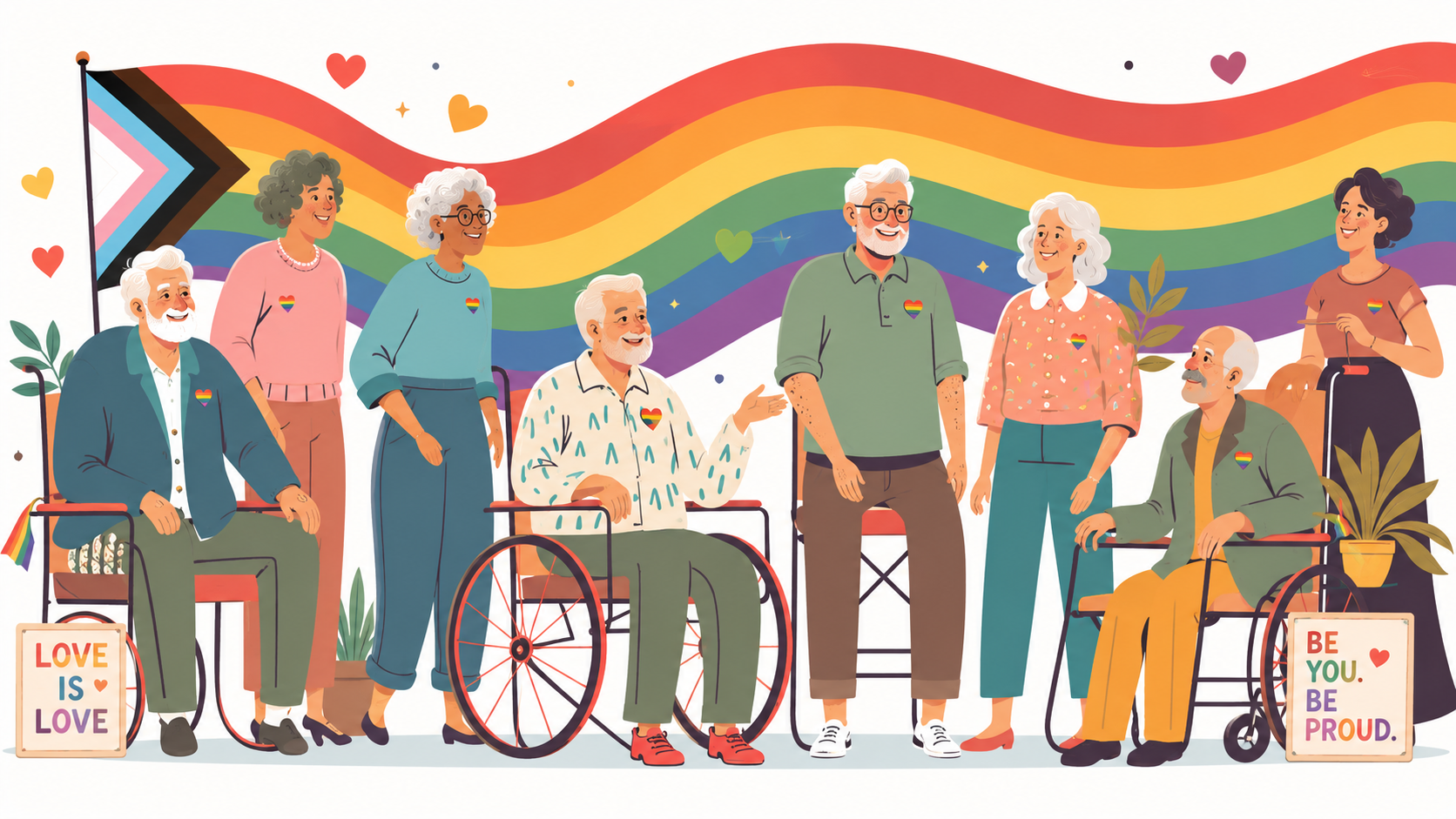
ท่ามกลางกระแสการเรียกร้องและความก้าวหน้าทางสิทธิเพื่อกลุ่มผู้มีความหลากหลายทางเพศหรือ LGBTQIA+ ที่ดำเนินควบคู่กันไปกับการยอมรับและปรับตัวของคนในสังคมซึ่งถูกฉายภาพผ่านวัฒนธรรมและสื่อสังคมเป็นวงกว้าง เช่น กระแสซีรีส์วาย BL หรือ GL ของไทยที่โด่งดังไกลไปทั่วโลก จนกลายเป็นซอฟต์พาวเวอร์สำคัญและสร้างเม็ดเงินมหาศาลให้กับเศรษฐกิจไทย ในขณะเดียวกัน ภาพคู่รัก LGBTQIA+ ที่เพิ่งได้รับสิทธิในการจดทะเบียนสมรสอย่างถูกต้องตามกฎหมายก็ปรากฏให้เห็นในพื้นที่สื่อและท่วมท้นไปด้วยคำยินดีเช่นกัน กล่าวคือ นับตั้งแต่วันที่ 23 มกราคม พ.ศ.2568 ซึ่งเป็นวันแรกที่คู่รักเพศเดียวกันสามารถจดทะเบียนสมรสได้ตามที่กฎหมายกำหนด ในวันนั้นมีคู่รักเพศเดียวกันเดินทางไปจดทะเบียนสมรสทั่วประเทศมากกว่า 1,000 คู่ในวันเดียว ทำให้ประเทศไทยกลายเป็นประเทศแรกในเอเชียตะวันออกเฉียงใต้และประเทศที่สามในทวีปเอเชียที่ออกกฎหมายรับรองการสมรสของคู่รักเพศเดียวกัน1
อย่างไรก็ดี ท่ามกลางบรรยากาศแห่งการเฉลิมฉลองนี้ อาจมีคนกลุ่มหนึ่งซึ่งล่วงเลยช่วงเวลาแห่งความหวังนั้นไปแล้ว และกำลังถูกเบียดบังเข้าสู่พื้นที่ชายขอบ ทั้งด้วยโครงสร้างทางสังคมที่ไม่เคยถูกออกแบบมาเพื่อพวกเขา และความเสื่อมถอยของสังขารตามวัยที่ไม่อาจหลีกหนีได้ คำถามที่ว่า “LGBTQIA+ สูงอายุ อยู่ตรงไหนในสังคมไทย” จึงเป็นคำถามที่สังคมปัจจุบันเริ่มให้ความสนใจและก็เป็นจุดตั้งต้นของบทความชิ้นนี้
ประเด็นที่ว่านั้นคือหากการดูแลผู้สูงอายุในระบบสุขภาพนั้นเป็นระบบการดูแลที่ครอบคลุมผู้สูงอายุทุกคนโดยไม่แบ่งแยกลักษณะเชิงอัตลักษณ์ ไม่ว่าจะเป็นเชื้อชาติ สถานะทางเศรษฐกิจ ตลอดจนเพศสภาพนั้น การเข้าถึงบริการนี้ของกลุ่มผู้มีความหลากหลายทางเพศคงไม่มีปัญหาใด ทว่า เราอาจจะต้องกลับมาพิจารณาว่า “ตรรกะ” และ “หน่วยวิเคราะห์” ที่รัฐและระบบสุขภาพไทยใช้เป็นฐานในการออกแบบนโยบายดูแลผู้สูงอายุนั้นถูกสร้างขึ้นบนสมมติฐานเรื่อง “ครอบครัว” แบบใด และตรรกะเหล่านั้นส่งผลให้ใครบ้างคนตกหล่นออกไปหรือไม่
เมื่อภาวะพึ่งพิงมาถึงเร็วกว่าที่ระบบจะพร้อม
ประเทศไทยกำลังเผชิญหน้ากับสังคมสูงวัยระดับสุดยอด (super-aged society) อย่างเต็มรูปแบบ โดยปี พ.ศ. 2569 ถือเป็นปีที่สัดส่วนประชากรอายุ 60 ปีขึ้นไปของไทยพุ่งสูงเกินร้อยละ 20 ของประชากรทั้งหมด หรือคิดเป็นจำนวนกว่า 13.6 ล้านคน ขณะที่จำนวนเด็กอายุต่ำกว่า 15 ปีกลับลดลงเหลือเพียงราว 9.5 ล้านคน และมีการคาดการณ์ว่าภายในปี พ.ศ. 2578 สัดส่วนผู้สูงอายุจะเพิ่มขึ้นเป็นร้อยละ 28.55 หรือเกือบหนึ่งในสามของประชากรไทยทั้งหมด2 ปรากฏการณ์เช่นนี้นำไปสู่ภาระในการดูแลผู้สูงผู้สูงอายุ โดยเฉพาะการให้การดูแลระยะยาว (long-term care) ซึ่งมุ่งเน้นไปที่ผู้สูงอายุที่มีภาวะพึ่งพิงนั้นมีความต้องการมากขึ้นเรื่อย ๆ
จากการสำรวจผู้สูงอายุแห่งชาติโดยสำนักงานสถิติแห่งชาติในปี พ.ศ.2567 นั้น พบว่าการดูแลผู้สูงอายุที่มีภาวะพึ่งพิงนั้นมากกว่าร้อยละ 90 ของผู้ดูแลหลักเป็นสมาชิกในครอบครัว3 กล่าวคือ ระบบการดูแลในปัจจุบันยังคงพึ่งพิงกลไกภายในครอบครัวของลูกหลานเป็นหลัก (familialization) โดยเฉพาะในสังคมไทยที่ให้คุณค่ากับความกตัญญูต่อบุพการีเป็นพิเศษ ทำให้การดูแลผู้สูงอายุโดยลูกหลานยังคงเป็นกำลังหลักในการเติมเต็มระบบการดูแลระยะยาวของประเทศ ไม่ว่าจะด้วยความเต็มใจหรือแรงกดดันทางสังคมก็ตาม ซึ่งล้วนต้องอาศัยทั้งแรงกาย แรงใจ และกำลังทรัพย์ในการดูแลผู้สูงอายุ ขณะเดียวกัน ในระดับภาพใหญ่ของประเทศนั้น ภาครัฐก็ต้องแบกรับภาระค่าใช้จ่ายด้านการรักษาพยาบาลควบคู่กับการสร้างกลไกการส่งมอบบริการให้สามารถเกิดขึ้นจริงได้ ซึ่งสิ่งนี้เกิดขึ้นท่ามกลางอัตราส่วนของวัยแรงงานต่อผู้สูงอายุที่ลดลงอย่างมีนัยสำคัญ จากที่เคยอยู่ระดับสูงกว่า 4 ต่อ 1 เหลือเพียงประมาณ 3 ต่อ 1 ในช่วงไม่กี่ปีที่ผ่านมา4
ด้วยอายุที่มากขึ้น ภาวะพึ่งพิงและการลดถอยของสมรรถภาพทางร่างกายและความคิดเป็นสิ่งที่หลีกเลี่ยงไม่ได้ และต้องอาศัยการดูแลที่มากไปกว่าการรักษาโรค ซึ่งต้องครอบคลุมถึงการรักษาไว้ซึ่งระดับของสมรรถนะ สิทธิ และเสรีภาพขั้นพื้นฐานของความเป็นมนุษย์ ทั้งในมิติสุขภาพ สังคม และการจัดการชีวิตประจำวัน5 อย่างไรก็ดี ระบบการดูแลที่พบเห็นได้ในปัจจุบัน ไม่ว่าจะเป็นสถานดูแลผู้สูงอายุ (nursing home) ไปจนถึงระบบนักบริบาลชุมชน (caregiver) ที่ให้การดูแลในชุมชนก็ยังมีข้อจำกัดที่แตกต่างกันไปตามบริบท เช่น การบริบาลในสังคมเมืองที่มีความยึดโยงระหว่างบุคคลหลวมกว่าสังคมชนบท หรือข้อจำกัดด้านงบประมาณและทรัพยากรที่แตกต่างกันออกไปในแต่ละพื้นที่ ทั้งหมดนี้นำไปสู่ความท้าทายของภาครัฐในการออกแบบนโยบายให้ครอบคลุมความต้องการของประชากรได้มากที่สุดเท่าที่จะเป็นไปได้ อย่างไรก็ตาม คำถามที่มักถูกมองข้ามในการออกแบบนโยบายเหล่านี้ คือ ระบบทั้งหมดถูกวางอยู่บนสมมติฐานว่า “จะมีใครสักคนในครอบครัว” คอยรับช่วงต่อภาระการดูแลนี้เสมอ ซึ่งอาจพูดได้หรือไม่ว่าสมมติฐานอาจไม่เป็นจริงสำหรับคนกลุ่มหนึ่งเลย
แล้วอะไรที่ 'หายไป' ของกลุ่มผู้มีความหลากหลายทางเพศ
การไม่มีทายาทและครอบครัวที่ต้องเลือกเอง
ปฏิเสธไม่ได้ว่ากลุ่มผู้มีความหลากหลายทางเพศยังเผชิญข้อจำกัดหลายประการในการมีทายาทสืบสกุล ทั้งในทางชีววิทยา มุมมองของคนในสังคมที่ยังยึดติดกับมายาคติว่าด้วยองค์ประกอบของ “ครอบครัวที่สมบูรณ์” และข้อกฎหมายที่ยังจำกัดเรื่องการอุ้มบุญอย่างเข้มงวด กล่าวคือ พระราชบัญญัติคุ้มครองเด็กที่เกิดโดยอาศัยเทคโนโลยีช่วยการเจริญพันธุ์ทางการแพทย์ พ.ศ.2558 อนุญาตให้เฉพาะคู่สมรสต่างเพศที่จดทะเบียนถูกต้องตามกฎหมายมาแล้วไม่น้อยกว่าสามปี และมีฝ่ายใดฝ่ายหนึ่งถือสัญชาติไทยเท่านั้นที่สามารถดำเนินการอุ้มบุญแบบไม่หวังผลกำไรได้ ส่วนการอุ้มบุญเชิงพาณิชย์ถือเป็นเรื่องต้องห้ามโดยสิ้นเชิง6 ข้อจำกัดเชิงโครงสร้างเช่นนี้ถูกตอกย้ำด้วยค่านิยมและการตีตราในอดีตที่นำไปสู่ความขัดแย้งภายในครอบครัวเดิมของผู้มีความหลากหลายทางเพศจำนวนไม่น้อย จนเกิดการตัดขาด กีดกัน และแบ่งแยกออกจากครอบครัว ส่งผลให้ผู้สูงอายุกลุ่มนี้จำนวนมากครองตนเป็นโสดและอยู่อาศัยตามลำพัง โดยไร้ทั้งทายาทและผู้ดูแล
ในสภาวะเช่นนี้ คนอีกจำนวนหนึ่งจึงเลือกที่จะ “สร้างครอบครัว” ขึ้นมาเอง จากกลุ่มเพื่อนสนิทที่ไว้วางใจ และตัดสินใจใช้ชีวิตร่วมกันในลักษณะที่เรียกว่าครอบครัวที่เลือกเอง (found family หรือ chosen family) ซึ่งงานวิจัยระดับนานาชาติชี้ตรงกันว่ามีแนวโน้มเพิ่มขึ้นในกลุ่มผู้สูงวัยที่มีความหลากหลายทางเพศ โดยเฉพาะในพื้นที่ที่ขาดเครือข่ายเครือญาติแบบดั้งเดิม เครือข่ายเหล่านี้มิได้ทำหน้าที่เพียงให้ความช่วยเหลือทางอารมณ์เท่านั้น แต่ยังทำหน้าที่เป็นกันชน (buffer) ต่อการตีตราและความเกลียดกลัวคนรักเพศเดียวกันที่ฝังแน่นอยู่ในสังคมที่ยังถือบรรทัดฐานแบบรักต่างเพศเป็นหลัก7 กล่าวอีกนัยหนึ่ง ครอบครัวที่เลือกเองจึงมิใช่เพียง “ทางเลือกรอง” ของคนที่ไม่มีครอบครัวสายเลือด หากแต่เป็นกลไกการเอาตัวรอดที่ถูกประดิษฐ์ขึ้นเพื่อทดแทนตาข่ายรองรับที่รัฐและสังคมไม่เคยจัดเตรียมไว้ให้
ตราบาปสะสมจากวัยทำงานสู่วัยพึ่งพิง
อีกประการหนึ่งที่ปฏิเสธไม่ได้คือ ในสังคมไทยยุคก่อน ค่านิยมและการกีดกันทางเพศยังปรากฏอย่างเด่นชัด ทำให้ผู้มีความหลากหลายทางเพศจำนวนมากถูกจำกัดทางเลือกในการประกอบอาชีพ และส่งผลเสียต่อความมั่นคงในชีวิตระยะยาวอย่างต่อเนื่อง ข้อมูลจากการศึกษาร่วมระหว่างองค์การแรงงานระหว่างประเทศ (International Labour Organization, ILO) และโครงการพัฒนาแห่งสหประชาชาติ (United Nations Development Programme, UNDP) เมื่อปี พ.ศ. 2561 ระบุว่า ผู้มีความหลากหลายทางเพศในประเทศไทยร้อยละ 23 เคยถูกล่วงละเมิด กลั่นแกล้ง หรือเลือกปฏิบัติในที่ทำงานเพราะเพศวิถีหรืออัตลักษณ์ทางเพศของตน และมีมากถึงร้อยละ 59 ที่เคยถูกปฏิเสธใบสมัครงานด้วยเหตุผลดังกล่าว โดยตัวเลขนี้พุ่งสูงขึ้นไปถึงร้อยละ 77 ในกลุ่มคนข้ามเพศ8 นั่นทำให้คนกลุ่มหนึ่งหลุดเข้าสู่อาชีพที่ไม่ได้รับการรับรองหรือคุ้มครองในระบบ เช่น กลุ่มอาชีพอิสระ นางโชว์ หรือแม้กระทั่งอาชีพค้าบริการทางเพศ ซึ่งไม่เพียงไม่ได้รับการสนับสนุนจากสังคม แต่ยังเป็นอาชีพที่ผิดกฎหมายและต้องหลบซ่อนจากการจับกุมของเจ้าหน้าที่รัฐ ประกอบกับความเสี่ยงทางสุขภาพที่มากขึ้นจากโรคติดต่อทางเพศสัมพันธ์หรือความรุนแรง ยิ่งตอกย้ำความไม่มั่นคงในการวางแผนชีวิตระยะยาว กล่าวให้ชัดคือ ความเปราะบางที่สั่งสมมาตั้งแต่วัยทำงานนี้เอง ที่จะกลายมาเป็น “ทุนตั้งต้น” อันแร้นแค้นของพวกเขาเมื่อก้าวเข้าสู่วัยพึ่งพิง
ภายใต้ภูเขาน้ำแข็งของปัญหา
แต่แท้จริงแล้ว เมื่อพิจารณาให้กว้างขึ้น ปัญหาเชิงโครงสร้างที่ผู้สูงอายุกลุ่ม LGBTQIA+ เผชิญอยู่นี้อาจเป็นเพียงกรณีที่รุนแรงและมองเห็นได้ชัดเจนที่สุดของวิกฤตที่กำลังคืบคลานเข้ามาในสังคมสูงวัยไทยในวงกว้าง กล่าวคือ สมมติฐานที่ว่าทุกคนจะมีครอบครัวสายเลือดคอยดูแลในยามชราภาพนั้น กำลังสูญเสียความเป็นจริงไปอย่างเงียบ ๆ
ข้อมูลจากการสำรวจประชากรของสำนักงานสถิติแห่งชาติ พ.ศ. 2566 ชี้ว่าครัวเรือนคนเดียว (single-person household) ในไทยมีสัดส่วนสูงถึงร้อยละ 19.7 ของครัวเรือนทั้งหมด และมีแนวโน้มเพิ่มขึ้นอย่างต่อเนื่อง9 ขณะที่ผู้สูงอายุที่อาศัยอยู่ตามลำพังมีจำนวนเพิ่มขึ้นจาก 9.2 แสนคนในปี 2554 เป็นกว่า 1.4 ล้านคนในปี 2564 นอกจากนี้ อัตราการเจริญพันธุ์รวมของไทย (total fertility rate) ได้ลดลงต่ำกว่าระดับทดแทนประชากรมาตั้งแต่ทศวรรษ 2530 และปัจจุบันอยู่ที่ประมาณ 1.1 บุตรต่อสตรีหนึ่งคน10 ซึ่งหมายความว่าคนรุ่นต่อไปจะมีพี่น้องน้อยลง มีลูกน้อยลง และภาระการดูแลผู้สูงอายุจะกระจุกตัวอยู่กับคนจำนวนน้อยลงเรื่อย ๆ
ภายใต้แนวโน้มเหล่านี้ กลุ่มที่เปราะบางเป็นพิเศษอย่างน้อยสามกลุ่มจึงตกอยู่นอกตาข่ายของระบบที่ยังออกแบบมาสำหรับครอบครัวแบบดั้งเดิม ได้แก่ หนึ่ง ผู้สูงอายุที่ไม่เคยแต่งงานหรือครองโสดโดยสมัครใจ ซึ่งยังถูกตีตราทางวัฒนธรรมว่าเป็นผู้ที่ล้มเหลวในการบรรลุบรรทัดฐานของ "วงจรชีวิตที่ถูกต้อง" (normative life course) สอง คู่สมรสต่างเพศที่ไม่มีบุตรหรือบุตรอพยพออกไปทำงานในเมือง ซึ่งการศึกษาก่อนหน้าได้ชี้ไว้แต่เนิ่น ๆ ว่าการย้ายถิ่นของแรงงานรุ่นลูกกำลังกัดเซาะระบบดูแลผู้สูงอายุแบบพึ่งพาครอบครัวในชนบทไทยอย่างรุนแรง11 และ สาม ผู้สูงอายุที่มีความหลากหลายทางเพศ ซึ่งเผชิญกับทุกปัจจัยที่กล่าวมาพร้อมกัน บวกกับมิติของการถูกกีดกันทางกฎหมายและการตีตราที่สั่งสมมาตลอดชีวิตกล่าวได้ว่า
ดังนั้น หากระบบสวัสดิการไทยยังคงวางสมมติฐานของตนอยู่บนฐานของ "ครอบครัวแบบดั้งเดิมที่สมบูรณ์" ก็เท่ากับว่าระบบนั้นกำลังออกแบบเพื่อตอบสนองประชากรที่มีจำนวนลดน้อยลงทุกวัน ขณะที่ผู้ที่ตกอยู่นอกนิยามดังกล่าวจะยังคงถูกทิ้งไว้เบื้องหลัง
เมื่อ “ครอบครัว” กลายเป็นหน่วยวิเคราะห์ที่มองไม่เห็นความหลากหลาย
หากมองผ่านกรอบคิดของแอสปิง-แอนเดอร์เซน (Gøsta Esping-Andersen) ผู้บุกเบิกแนวคิดระบอบรัฐสวัสดิการในผลงานชิ้นสำคัญคือ Three Worlds of Welfare Capitalism12 จะพบว่าหัวใจของการวิเคราะห์รัฐสวัสดิการคือแนวคิดการลดความเป็นสินค้า (decommodification) หรือระดับที่ปัจเจกบุคคลสามารถดำรงชีวิตอยู่ได้โดยไม่ต้องพึ่งพิงตลาดแรงงานอย่างเต็มที่ อย่างไรก็ดี การลดความเป็นสินค้าในหลายประเทศ รวมถึงไทยนั้น มักถูกออกแบบควบคู่ไปกับแนวคิดความเป็นครอบครัวนิยม (familialism) กล่าวคือ การวางสมมติฐานว่าสถาบันครอบครัว โดยเฉพาะครอบครัวเดี่ยวที่ประกอบด้วยคู่สมรสต่างเพศและทายาทสายเลือด จะเป็นกลไกหลักในการแบกรับภาระการดูแลแทนที่รัฐจะต้องลงทุนเอง
ทั้งนี้ งานศึกษานโยบายสังคมเชิงวิพากษ์ที่นำมุมมองเควียร์ (queer) เข้ามาวิเคราะห์ได้ชี้ให้เห็นว่า สมมติฐานเช่นนี้มิได้มีความเป็นกลางแต่อย่างใด หากแต่สะท้อนกรอบคิดที่ถือว่าความสัมพันธ์แบบรักต่างเพศเป็นบรรทัดฐานหรือสิ่งปกติ (heteronormativity) ของสังคม ซึ่งฝังรากลึกอยู่ในการออกแบบนโยบายสังคมแทบทุกแขนง กล่าวคือ หน่วยวิเคราะห์พื้นฐานของรัฐสวัสดิการมักถูกตั้งต้นจาก “ครอบครัวแบบรักต่างเพศ” เป็นค่าเริ่มต้นเสมอ จนทำให้ประเด็นเรื่องเพศวิถีและอัตลักษณ์ทางเพศแทบไม่เคยถูกพูดถึงอย่างจริงจังในงานศึกษานโยบายสังคมกระแสหลัก13 ผลที่ตามมาคือ ผู้สูงอายุที่มีความหลากหลายทางเพศจึงกลายเป็นกลุ่มที่ “มองไม่เห็น” ในสายตาของระบบ ไม่ว่าจะเพราะถูกตัดขาดจากครอบครัวเดิม หรือเพราะข้อจำกัดในการมีทายาท ซึ่งนั่นไม่ใช่เพราะพวกเขาไม่มีอยู่จริง แต่เพราะระบบไม่เคยถูกออกแบบมาให้มองเห็นพวกเขาตั้งแต่แรก
ในอีกมุมหนึ่ง หากพิจารณาด้วยแนวคิดเรื่องทุน (capital) ของปิแอร์ บูร์ดิเยอ (Pierre Bourdieu)14 ซึ่งจำแนกทุนออกเป็นทุนเศรษฐกิจ ทุนวัฒนธรรม และทุนทางสังคม (social capital) ช่วยให้เห็นภาพชัดเจนยิ่งขึ้นว่า “ครอบครัวที่เลือกเอง” ที่ปรากฏในชุมชนผู้มีความหลากหลายทางเพศนั้น แท้จริงแล้วคือความพยายามสร้างทุนทางสังคมทดแทนขึ้นมาด้วยมือของตนเอง สิ่งนี้จะเป็นเครือข่ายแห่งความไว้เนื้อเชื่อใจ การตอบแทนซึ่งกันและกัน และพันธะทางใจ ในจุดที่ทุนทางสังคมแบบเครือญาติสายเลือดซึ่งระบบสวัสดิการคาดหวังไว้แต่แรกนั้นไม่อาจเข้าถึงได้
ประเด็นวิเคราะห์นี้สอดรับกับข้อวิพากษ์ของนักสตรีนิยมที่เสนอมาก่อนหน้านี้ว่า รัฐสวัสดิการแบบครอบครัวนิยมนั้น แท้จริงแล้วคือการผลักภาระการดูแลให้ตกอยู่บนบ่าของผู้หญิงในฐานะผู้ดูแลอย่างไม่เป็นทางการ (informal caregiver) โดยที่รัฐแทบไม่ต้องรับผิดชอบทางการเงิน15 กล่าวอีกนัยหนึ่ง คือ ความเป็นครอบครัวนิยม ไม่ได้กระจายภาระอย่างเป็นธรรม หากแต่เป็นกลไกที่เอื้อให้รัฐประหยัดงบประมาณโดยอาศัยแรงงานดูแลที่ไม่มีราคาและไม่มีค่าจ้าง ซึ่งส่วนใหญ่ตกอยู่กับผู้หญิงในครัวเรือน16
อย่างไรก็ตาม สำหรับผู้สูงอายุที่มีความหลากหลายทางเพศ โดยเฉพาะผู้ที่ใช้ชีวิตโสดหรือไม่มีทายาทสายเลือด คำถามที่เกิดขึ้นคือ ใครคือผู้ดูแลอย่างไม่เป็นทางการที่ระบบสวัสดิการได้ให้สมมติฐานไว้เสมอ? ครอบครัวที่เลือกได้ (chosen family) ซึ่งมักเป็นเครือข่ายสนับสนุนหลักของกลุ่ม LGBTQIA+ นั้น กลับไม่ได้รับการยอมรับในเชิงสถาบันแต่อย่างใด เนื่องจากกฎหมายและระเบียบราชการจำนวนมากยังคงนิยาม “ผู้ดูแล” หรือ “ญาติ” ไว้อย่างแคบ ผูกติดอยู่กับสายเลือดหรือทะเบียนสมรสเป็นหลัก ทำให้แม้แต่คู่ชีวิตหรือเพื่อนผู้ดูแลที่ใกล้ชิดที่สุด ก็อาจไม่มีสิทธิตามกฎหมายในการให้ความยินยอมด้านการรักษาพยาบาล การเยี่ยมไข้ในสถานพยาบาล หรือการจัดการทรัพย์สินภายหลังการเสียชีวิตของคนที่ตนรัก หากไม่ได้มีการจดทะเบียนสมรสกันตามกฎหมาย17
แนวทางหนึ่งในการตอบสนองต่อช่องว่างเชิงโครงสร้างนี้คือ แนวคิดการลดการพึ่งพิงครอบครัว (defamilialization) ซึ่งได้นิยามไว้ว่าหมายถึงระดับที่นโยบายสังคมช่วยให้ปัจเจกบุคคลสามารถดำรงสวัสดิการของตนได้โดยอิสระจากสถาบันครอบครัว18,19 กล่าวคือ แทนที่จะวางสมมติฐานว่าทุกคนมีเครือข่ายครอบครัวเดี่ยวแบบดั้งเดิมรองรับ รัฐควรออกแบบระบบที่รองรับโครงสร้างชีวิตที่หลากหลาย ไม่ว่าจะเป็นการอยู่คนเดียว การอยู่ร่วมกับคู่ชีวิตที่ไม่ได้จดทะเบียน หรือการพึ่งพาเครือข่ายมิตรสหายแทนสายเลือด
ข้อเสนอเชิงนโยบาย:
จะออกแบบรัฐสวัสดิการที่ “มองเห็น” ครอบครัวทุกรูปแบบได้อย่างไร
จากช่องว่างเชิงโครงสร้างที่กล่าวมาข้างต้น ผู้เขียนมิได้เสนอให้รัฐสร้างสวัสดิการเฉพาะสำหรับผู้สูงอายุ LGBTQIA+ ในฐานะกลุ่มประชากรพิเศษที่แยกขาดจากผู้สูงอายุคนอื่น หากแต่เสนอให้ "ใช้ประสบการณ์ของผู้สูงอายุที่มีความหลากหลายทางเพศเป็นกระจกสะท้อนข้อจำกัดของระบบการดูแลผู้สูงอายุไทยโดยภาพรวม" โดยเฉพาะระบบที่ยังวางอยู่บนสมมติฐานว่าผู้สูงอายุทุกคนย่อมมีลูกหลาน คู่สมรส หรือญาติสายเลือดคอยรับช่วงต่อภาระการดูแลเสมอ
รัฐควรขยายความหมายของ “ผู้ตัดสินใจแทน” ให้กว้างกว่าสายเลือดและทะเบียนสมรส กระทรวงสาธารณสุข กระทรวงการพัฒนาสังคมและความมั่นคงของมนุษย์ สำนักงานหลักประกันสุขภาพแห่งชาติ และองค์กรปกครองส่วนท้องถิ่น ควรร่วมกันพัฒนาระบบการระบุ “ผู้ดูแลที่ผู้สูงอายุเลือกเอง” หรือ designated caregiver เพื่อให้ผู้สูงอายุสามารถระบุบุคคลที่ตนไว้วางใจได้อย่างเป็นทางการ ไม่ว่าบุคคลนั้นจะเป็นคู่ชีวิต เพื่อนสนิท เพื่อนบ้าน หรือสมาชิกในครอบครัวที่เลือกเอง กลไกดังกล่าวควรถูกเชื่อมโยงกับการวางแผนการดูแลรายบุคคล การเยี่ยมบ้าน การส่งต่อบริการ และการตัดสินใจในระบบสุขภาพภายใต้ขอบเขตที่กฎหมายรองรับได้
ระบบการดูแลระยะยาวควรเปลี่ยนจากการประเมินเฉพาะภาวะพึ่งพิงทางกาย ไปสู่การประเมิน “ทุนทางสังคมและเครือข่ายการดูแล” ของผู้สูงอายุอย่างเป็นระบบ กล่าวคือ การประเมินผู้สูงอายุไม่ควรถามเพียงว่ามีโรคอะไร เดินได้หรือไม่ หรือช่วยเหลือตนเองได้มากน้อยเพียงใด แต่ควรถามด้วยว่าเมื่อเจ็บป่วยจะโทรหาใคร ใครสามารถพาไปโรงพยาบาล ใครช่วยจัดการยา ใครช่วยจัดการเรื่องการเงิน และใครคือคนที่ผู้สูงอายุไว้วางใจจริง ๆ คำถามเหล่านี้จะทำให้เรามองเห็นผู้สูงอายุที่อยู่ลำพัง ผู้สูงอายุที่ไม่มีลูกหลาน และผู้สูงอายุ LGBTQIA+ ที่อาจมีเครือข่ายชีวิตแตกต่างจากครอบครัวแบบดั้งเดิม ซึ่งจะนำไปสู่การออกแบบแผนบริการ (care plan) ที่สอดคล้องกับความต้องการที่หลากหลายของผู้สูงอายุที่มีภาวะพึ่งพิงแต่ละราย
รัฐควรพัฒนาบริการดูแลในชุมชนที่ลดการพึ่งพาครอบครัวเป็นศูนย์กลาง โดยเฉพาะในเขตเมืองที่ความสัมพันธ์ทางเครือญาติและชุมชนมีลักษณะหลวมมากขึ้น การจัดบริการนักบริบาลชุมชน ศูนย์ดูแลกลางวัน บริการ respite care สำหรับผู้ดูแล การเยี่ยมบ้านแบบสหวิชาชีพ และระบบอาสาสมัครที่ได้รับการฝึกอบรมเรื่องความหลากหลายทางเพศ ควรถูกออกแบบให้เข้าถึงได้โดยไม่ต้องมี “ลูกหลาน” เป็นผู้ตัดสินใจหลักเสมอไป เพราะหากระบบยังเริ่มต้นจากคำถามว่า “ญาติอยู่ที่ไหน” ผู้สูงอายุอีกจำนวนหนึ่งก็จะถูกทำให้ไม่มีตัวตนตั้งแต่ก้าวแรกในระบบบริการ
สถานพยาบาลและสถานดูแลผู้สูงอายุควรมีมาตรฐานการดูแลที่เป็นมิตรต่อความหลากหลายทางเพศอย่างเป็นรูปธรรม ไม่ว่าจะเป็นการอบรมบุคลากรเรื่องเพศวิถีและอัตลักษณ์ทางเพศ การใช้ถ้อยคำที่เคารพตัวตนของผู้รับบริการ การคุ้มครองความเป็นส่วนตัว การเปิดให้บุคคลที่ผู้สูงอายุไว้วางใจเข้าเยี่ยมหรือมีส่วนร่วมในการวางแผนการดูแล ตลอดจนการป้องกันการเลือกปฏิบัติในสถานดูแลระยะยาว มาตรฐานเหล่านี้ไม่ควรถูกมองว่าเป็นเรื่องของ “ความอ่อนไหวทางวัฒนธรรม” เท่านั้น แต่เป็นส่วนหนึ่งของคุณภาพ ความปลอดภัย และศักดิ์ศรีของการดูแล
ทั้งนี้ ข้อเสนอข้างต้นเป็นเพียงจุดเริ่มต้นของการสนทนา มิใช่คำตอบสำเร็จรูป เพราะการจะทำให้นโยบายเหล่านี้เกิดขึ้นได้จริง ย่อมต้องอาศัยทั้งเจตจำนงทางการเมืองและการเปลี่ยนวิธีคิดของสังคมไปพร้อมกัน ก้าวแรกที่เป็นรูปธรรมที่สุดคือการปฏิรูปกระบวนการประเมินความจำเป็นในการรับบริการดูแลระยะยาว โดยนำมิติทางสังคม (social dimension) เข้ามาเป็นส่วนหนึ่งของการประเมินอย่างเป็นระบบ ไม่ใช่เพียงสมรรถภาพทางกายหรือการวินิจฉัยทางการแพทย์เท่านั้น ตัวอย่างที่น่าสนใจ ได้แก่ ระบบ interRAI ซึ่งใช้อยู่ในหลายประเทศ รวมถึงในระบบประกันการดูแลระยะยาวของญี่ปุ่นและเกาหลีใต้ ซึ่งออกแบบให้การประเมินครอบคลุมถึงเครือข่ายสนับสนุนทางสังคม ความโดดเดี่ยว และบริบทของที่อยู่อาศัย เพื่อให้การจัดสรรบริการสะท้อนความจำเป็นที่แท้จริงของผู้รับบริการ ไม่ใช่แค่เงื่อนไขทางคลินิกเท่านั้น
บทสรุป: ใครคือ “ครอบครัว” ในสายตาของรัฐไทย
ท้ายที่สุดนี้ วลี “กะเทยตาย กะเทยเผา” จึงไม่ใช่เพียงถ้อยคำที่สื่อถึงความแน่นแฟ้นและการสนับสนุนกันภายในชุมชนผู้มีความหลากหลายทางเพศเท่านั้น หากแต่เป็นกระจกที่สะท้อนข้อจำกัดและปัญหาซึ่งถูกตอกย้ำให้เด่นชัดผ่านตัวตนและอัตลักษณ์ทางเพศ เป็นกลไกการเอาตัวรอดของคนกลุ่มหนึ่งในสังคมที่ปราศจากตาข่ายรองรับความมั่นคงและความปลอดภัยในชีวิต กล่าวอย่างตรงไปตรงมา คำถามที่สำคัญกว่าคือ สังคมไทยจะยังปล่อยให้คำพูดเชิงสัญลักษณ์เช่นนี้ต้องแบกรับภาระที่ควรจะเป็นหน้าที่ของรัฐต่อไปอีกนานเพียงใด
ดังนั้น คำถามที่ตามมาจึงไม่ใช่เพียงว่ารัฐควรจัดสวัสดิการให้กลุ่มผู้มีความหลากหลายทางเพศสูงวัย “เพิ่มเติม” จากที่มีอยู่หรือไม่ หรือผู้เขียนประสงค์ให้สังเคราะห์นโยบายเพียงสำหรับกลุ่มเปราะบางจำเพาะหรืออย่างใด หากแต่ภาพที่เสนอนี้สะท้อนช่องว่างของระบบที่ได้ชื่อว่า “ครอบคลุมถ้วนหน้า” อย่างเป็นรูปธรรม และฝากเป็นคำถามที่ลึกกว่านั้นมาก นั่นคือ สังคมไทยนิยาม “ครอบครัว” ที่สมควรได้รับการคุ้มครองจากรัฐไว้อย่างไร และผู้ที่อยู่นอกนิยามนั้น ไม่ว่าจะด้วยเหตุผลทางเพศวิถี อัตลักษณ์ทางเพศ หรือเงื่อนไขชีวิตอื่นใดก็ตาม จะมีที่ทางอยู่ในระบบสวัสดิการของรัฐหรือไม่ คำถามนี้จึงมิใช่เพียงประเด็นของการออกแบบนโยบายผู้สูงอายุทุกคน หากแต่เป็นคำถามในอุดมการณ์ประชาธิปไตยว่าด้วยความเป็นพลเมืองและศักดิ์ศรีความเป็นมนุษย์ ที่สมควรถูกนำมาถกเถียงอย่างเปิดเผยในเวทีสาธารณะ ก่อนที่ “อนาคตของผู้สูงอายุทุกคนในประเทศไทย” ที่ถูกพูดถึงอยู่บ่อยครั้งในวาระทางนโยบาย จะกลายเป็นเพียงวาทกรรมที่สวยหรู แต่ไร้ที่ทางในนโยบายที่จับต้องได้จริง
There is an ongoing wave of demands and gains in rights for sexual and gender minorities, or LGBTQIA+ persons. This wave has come together with a wider social acceptance, visible through culture and media: Thai Boys' Love (BL) and Girls' Love (GL) drama series have become globally known, turning into a notable form of soft power and bringing in large revenues for the Thai economy. Images of LGBTQIA+ couples who recently won the legal right to register their marriages have likewise filled the media space, full of congratulations. Indeed, since 23 January 2025, the first day same-sex couples could legally register their marriages, more than 1,000 couples did so nationwide in a single day. This made Thailand the first country in Southeast Asia, and the third in Asia, to pass a law recognising same-sex marriage1.
Yet within this celebratory mood, there may be a group of people who have already moved past the moment of hope now being celebrated, and who are being pushed toward the margins of society. This happens both because social structures were never built with them in mind, and because of the bodily decline that comes with age. The question of “where do older LGBTQIA+ persons stand in Thai society” is therefore one that contemporary society is starting to take seriously, and it is the starting point of this article.
The point worth raising is this: if the elderly-care system within the health system genuinely covered every older person without distinction of ethnicity, economic status, or gender, then access to such services for sexual and gender minorities would not be a problem at all. Perhaps, then, we should step back and look at the “logic” and the “unit of analysis” that the Thai state and health system use when designing elderly-care policy. What assumption about “family” has it been built on, and as a result, who has been left out?
When Dependency Arrives Faster Than the System Can Respond
Thailand is now facing a super-aged society in the full sense of the term. In 2026 (B.E. 2569), the share of the population aged 60 and above passed 20 percent of the total, equal to more than 13.6 million people, while the number of children under 15 fell to roughly 9.5 million. Projections suggest that by 2035 (B.E. 2578), older persons will make up 28.55 percent of the population, or nearly one in three Thais2. This has driven a growing need for elderly care, and especially for long-term care directed at older persons living with dependency.
The 2024 (B.E. 2567) National Elderly Survey by the National Statistical Office found that more than 90 percent of primary caregivers for dependent older persons are family members3. In other words, the current care system still relies mainly on familialisation (familialization), meaning care provided within the household of one's children and grandchildren. This is especially true in a Thai society that places special value on filial gratitude (ka-tan-yu, gratitude toward one's parents), so that care from descendants remains the main force holding up the country's long-term-care system, whether out of willingness or social pressure. Either way, it asks for considerable physical effort, emotional labour, and money to look after even one older person. At the national level, the state must also bear the cost of medical treatment and build the systems needed to deliver care, and it must do this while the ratio of working-age people to older persons keeps falling. It once stood at more than 4 to 1, and has dropped to roughly 3 to 1 in recent years4.
As people grow older, dependency and the decline of physical and mental capacity become unavoidable. Caring for them takes more than treating illness; it must also protect a person's level of functioning, rights, and basic freedoms in matters of health, social life, and daily living5. Yet the care systems we see today, from nursing homes to community-caregiver systems that provide care within neighbourhoods, still have limits that vary by setting. Community caregiving works differently in cities, where ties between people tend to be looser than in rural areas, and budgets and resources differ from place to place too. All of this makes it hard for the state to design policy that covers everyone's needs. Even so, a question that tends to get overlooked in this kind of policy design is this: the whole system rests on the assumption that “there will always be someone in the family” to take on the burden of care. Is that assumption simply not true for some groups of people at all?
So What Is 'Missing' for Sexual and Gender Minorities?
The Absence of Heirs and Families Built by Choice
It cannot be denied that sexual and gender minorities still face many obstacles to having children who could carry on the family line. Some of these obstacles are biological, some come from society's lingering idea of what a “complete family” should look like, and some are written directly into law through strict limits on surrogacy. The Protection of Children Born through Assisted Reproductive Technologies Act B.E. 2558 (2015), for instance, allows only legally married heterosexual couples, married for at least three years and with at least one Thai national among them, to pursue non-commercial surrogacy, while commercial surrogacy is banned outright6. These structural limits, layered on top of the values and stigma of earlier times, have caused conflict within the families of origin of many sexual and gender minorities, leading to estrangement, exclusion, and separation from family. As a result, a good number of older people in this group end up living alone, without either heirs or caregivers.
Faced with this, another group of people choose instead to build a family of their own, made up of close, trusted friends who decide to live their lives together. This is what is known as a found family or chosen family. Research from other countries consistently points to a rising number of such arrangements among older sexual and gender minorities, especially where traditional kinship networks are absent. These networks do more than offer emotional support; they also act as a buffer against the stigma and homophobia still deeply rooted in a society built around heterosexual norms7. In short, the chosen family is not simply a “fallback” for those without blood relatives. It is a survival mechanism, built to stand in for a safety net that the state and society never prepared for them in the first place.
Accumulated Stigma: From Working Age into Dependency
It also cannot be denied that, in earlier Thai society, attitudes that excluded people on the basis of gender were strong, and these attitudes limited the kinds of work many sexual and gender minorities could do, weakening their long-term security in life. A joint study by the International Labour Organization (ILO) and the United Nations Development Programme (UNDP) in 2018 (B.E. 2561) found that 23 percent of sexual and gender minorities in Thailand had been harassed, bullied, or discriminated against at work because of their sexual orientation or gender identity, and as many as 59 percent had been turned down for jobs for the same reasons; among transgender people, that figure rose to 77 percent8. This pushed part of this population into work that the system neither recognises nor protects, such as freelance work, cabaret performance, or sex work. These jobs not only go unsupported by society but remain illegal, forcing those who do them to stay hidden from the authorities, while also facing higher risks of sexually transmitted infection or violence, all of which makes long-term planning for life harder still. Put plainly, it is this very vulnerability, built up since their working years, that becomes their thin “starting capital” once they reach the years of dependency.
Beneath the Iceberg of the Problem
That said, if we widen the view, the structural problems facing older LGBTQIA+ persons may simply be the most visible and severe face of a crisis that is quietly spreading through Thailand's ageing society as a whole. In other words, the assumption that everyone will have a blood family ready to care for them in old age is quietly losing its grip on reality.
Data from the National Statistical Office's 2023 (B.E. 2566) population survey shows that single-person households now make up as much as 19.7 percent of all households in Thailand, and the share keeps rising9. Meanwhile, the number of older people living alone grew from roughly 920,000 in 2011 (B.E. 2554) to more than 1.4 million in 2021 (B.E. 2564). On top of this, Thailand's total fertility rate has stayed below replacement level since the 1990s (the 2530s in the Thai calendar) and now sits at around 1.1 children per woman10. This means future generations will have fewer siblings and fewer children of their own, so the burden of elderly care will fall on an ever-smaller number of people.
Given these trends, at least three groups now find themselves outside the safety net of a system still built around the traditional family. First are older people who never married or who chose to stay single, and who are still culturally stigmatised as having “failed” to follow the expected course of life. Second are heterosexual couples without children, or whose children have moved away to work in the city; earlier studies have already pointed out how this kind of outward migration of the younger working generation has worn down family-based elderly care in rural Thailand11. Third are older sexual and gender minorities, who face all of these pressures at once, on top of a lifetime's worth of legal exclusion and stigma.
So if Thailand's welfare system keeps building its assumptions on the idea of a “complete, traditional family,” it is, in effect, designing itself for a population that grows a little smaller each year, while leaving behind those who fall outside that picture.
When 'Family' Becomes a Unit of Analysis That Cannot See Diversity
Gøsta Esping-Andersen, the scholar who pioneered the study of welfare-state regimes in his landmark work The Three Worlds of Welfare Capitalism12, argued that the heart of welfare-state analysis lies in the idea of decommodification, or the degree to which a person can support their own life without depending entirely on the labour market. In many countries, Thailand included, decommodification tends to be designed together with the logic of familialism: the assumption that the family, and especially the nuclear family made up of a heterosexual married couple and blood-related children, will be the main mechanism for carrying the burden of care, in place of direct investment by the state.
That said, scholars who study social policy through a queer lens have shown that this assumption is anything but neutral. It actually reflects a way of thinking that treats heterosexual relationships as the standard, or as “normal”: heteronormativity, a view embedded deep in the design of social policy across nearly every field. In other words, the basic unit of analysis for welfare states is almost always set, by default, as the “heterosexual family,” so that questions of sexual orientation and gender identity have rarely been taken seriously in mainstream social-policy research13. The result is that older sexual and gender minorities become a group the system simply cannot “see,” not because they don't exist, but because the system was never built, from the start, to see them, whether due to estrangement from their families of origin or to the obstacles to having children of their own.
Looked at from another angle, Pierre Bourdieu's idea of capital14, which separates economic capital, cultural capital, and social capital, helps us see more clearly that the “chosen family” found in communities of sexual and gender minorities is really an attempt to build, by one's own hands, a substitute form of social capital. It is a network of trust, of give and take, and of emotional commitment, built precisely where the kin-based social capital that the welfare system assumed from the outset cannot be reached.
This fits with an argument feminist scholars have long made: that familialist welfare states, in practice, simply pass the burden of care onto women as informal caregivers, while the state itself takes on almost no financial responsibility15. Put another way, familialism does not share the burden fairly. It is a way for the state to save money by drawing on care work that carries no price and no wage, work that falls overwhelmingly on women within the household16.
For older sexual and gender minorities, though, especially those who live alone or without children of their own, a question arises: who exactly is the “informal caregiver” that the welfare system has always assumed will be there? The chosen family, which so often acts as the main support network for LGBTQIA+ communities, gets no recognition from institutions at all, because much of the law and many administrative rules still define “caregiver” or “relative” narrowly, tying the term mainly to blood ties or marriage registration. Because of this, even the closest life partner or caregiving friend may have no legal standing to give consent for medical treatment, to visit a loved one in hospital, or to manage that person's estate after death, unless the couple has registered their marriage under the law17.
One way to respond to this structural gap is the idea of defamilialization, defined as the degree to which social policy lets individuals support their own welfare without depending on the family as an institution18,19. In other words, instead of assuming that everyone has a traditional nuclear-family network to fall back on, the state should design systems that can support different kinds of life arrangements, whether someone lives alone, lives with an unregistered life partner, or relies on a network of friends in place of blood relatives.
Policy Recommendations: How Might We Design a Welfare State That 'Sees' Every Form of Family?
Given the structural gaps described above, the author is not proposing that the state set up a separate welfare track just for older LGBTQIA+ persons, apart from older people in general. The point, rather, is to “use the experience of older sexual and gender minorities as a mirror that shows the limits of Thailand's elderly-care system as a whole”, a system that still assumes every older person will, naturally, have children, a spouse, or blood relatives ready to take on the burden of care.
The state should widen the meaning of “surrogate decision-maker” beyond blood ties and marriage registration. The Ministry of Public Health, the Ministry of Social Development and Human Security, the National Health Security Office, and local administrative organisations should work together to build a system that lets a person name a “caregiver of their own choosing”, or designated caregiver. This would let older people formally name someone they trust, whether a life partner, a close friend, a neighbour, or a member of a chosen family. Such a system should be linked to individual care planning, home visits, service referrals, and decisions within the health system, as far as the law allows.
The long-term-care system should move from assessing only physical dependency toward also assessing, in a systematic way, an older person's “social capital and care network.” That means asking not just what illnesses someone has, whether they can walk, or how much they can manage alone, but also: who would they call if they fell ill? Who could take them to hospital? Who would help manage their medication? Who would help manage their money? And who is the person this older individual truly trusts? Questions like these would let us see older people who live alone, older people without children, and older LGBTQIA+ persons whose life networks may look different from the traditional family, and from there, build care plans that genuinely match the different needs of each dependent older person.
The state should also build community-based care services that lean less on the family as the central point of support, especially in cities, where ties of kinship and community have grown looser. Community caregiver services, day-care centres, respite care for caregivers, home visits by multidisciplinary teams, and volunteer programmes trained on issues of sexual and gender diversity should all be designed so people can use them without “children” having to be the main decision-makers. If the system keeps starting from the question “where are the relatives?”, then another group of older people will simply become invisible from the very first step of seeking care.
Hospitals and elder-care facilities should set clear standards of care that are welcoming toward sexual and gender diversity. This includes training staff on issues of sexual orientation and gender identity, using language that respects the identity of those receiving care, protecting privacy, allowing the people an older person trusts to visit or join in care planning, and preventing discrimination in long-term-care settings. These standards should not be seen as simply matters of “cultural sensitivity.” They are part of what makes care good, safe, and dignified in the first place.
That said, the proposals above are only a starting point for discussion, not a finished answer. Turning them into reality will take both political will and a shift in how society thinks, and these need to move forward together. The most concrete first step would be to reform how the need for long-term-care services is assessed, by bringing the social dimension into that assessment in a systematic way, rather than relying only on physical capacity or medical diagnosis. One useful example is the interRAI system, used in a number of countries, including within the long-term-care insurance systems of Japan and South Korea. It is designed so that assessment also looks at social-support networks, isolation, and a person's living situation, so that the services someone receives reflect their real needs rather than their clinical condition alone.
Conclusion: Who Counts as 'Family' in the Eyes of the Thai State?
In the end, the phrase “กะเทยตาย กะเทยเผา” (literally, “when one kathoey dies, another cremates her,” an expression of the deep mutual solidarity within the community) is more than just a sign of solidarity and mutual support among sexual and gender minorities. It is also a mirror that reflects the constraints and problems etched ever more deeply into their identities and sense of self, a survival mechanism for a group of people living in a society with no safety net to secure their stability and safety in life. To put it bluntly, the more important question is this: for how much longer will Thai society let a phrase like this go on carrying a burden that should, by rights, belong to the state?
The question that follows, then, is not simply whether the state should give “extra” welfare to older sexual and gender minorities on top of what already exists, nor is the author suggesting that policy be built solely around this one group. What this article has tried to do is hold up a concrete reflection of the gaps within a system that calls itself “universal,” and to leave behind a deeper question: how does Thai society define the “family” that deserves the state's protection, and do those who fall outside that definition, whether because of sexual orientation, gender identity, or any other condition of life, have a place within the state's welfare system at all? This is not simply a matter of designing policy for older people in general. It is a question rooted in the democratic ideal of citizenship and human dignity, one that deserves open debate in the public sphere, before the often-repeated phrase “the future of every older person in Thailand” becomes nothing more than an elegant piece of rhetoric with no place in policies people can actually feel and touch.
References
- Paddock RC, Suhartono M. Thailand Celebrates New Same-Sex Marriage Law With Mass Wedding. The New York Times. 2025 Jan 23. link
- การคาดประมาณประชากรของประเทศไทย พ.ศ. 2553-2583. สำนักงานคณะกรรมการสภาพัฒนาเศรษฐกิจและสังคมแห่งชาติ; 2013 Feb. link
- สัมฤทธิ์ ศรีธำรงสวัสดิ์, ไพบูลย์ สุริยะวงศ์ไพศาล, ปวินท์ ศรีวิเชียร, ณัฐวุฒิ เอี่ยงธนรัตน์, ภาณุวิชญ์ แก้วกำจรชัย, พีรสิชฌ์ สิทธิรัตน์, et al. รายงานฉบับสมบูรณ์โครงการการศึกษาสถานการณ์การจัดบริการดูแลระยะยาวในชุมชนของไทยในช่วงทศวรรษที่ผ่านมาอย่างรอบด้าน. กรุงเทพมหานคร: คณะแพทยศาสตร์โรงพยาบาลรามาธิบดี มหาวิทยาลัยมหิดล; 2026. p. 265. link
- Glinskaya EE, Walker T, Wanniarachchi TJ. Labor Markets and Social Policy in a Rapidly Transforming : Caring for Thailand's Aging Population. Washington, D.C: World Bank Group; 2021. link
- World Health Organization. Framework for countries to achieve an integrated continuum of long-term care. Geneva: World Health Organization; 2021. link
- พระราชบัญญัติคุ้มครองเด็กที่เกิดโดยอาศัยเทคโนโลยีช่วยการเจริญพันธุ์ทางการแพทย์ พ.ศ. 2558. 2015 May 1.
- Wardecker BM, Matsick JL. Families of Choice and Community Connectedness: A Brief Guide to the Social Strengths of LGBTQ Older Adults. J Gerontol Nurs. 2020 Feb 1;46(2):5–8. link
- Economic inclusion of LGBTI groups in Thailand. Washington, D.C.: World Bank Group; 2018.link
- การสำรวจภาวะเศรษฐกิจและสังคมของครัวเรือน พ.ศ. 2566 ทั่วราชอาณาจักร. กรุงเทพมหานคร: สำนักงานสถิติแห่งชาติ; 2024. link
- United Nations. World Population Prospects 2024. 2024. link
- Knodel J, Saengtienchai C. Rural parents with urban children: social and economic implications of migration for the rural elderly in Thailand. Population, Space and Place. 2007;13(3):193–210. link
- Esping-Andersen G. The Three Worlds of Welfare Capitalism. Princeton, N.J.: Princeton University Press; 1990. 260 p.
- Gregory L, Matthews P. Social Policy and Queer Lives: Coming Out of the Closet? Journal of Social Policy. 2022 Jul;51(3):596–610. link
- Bourdieu P. The Forms of Capital. In: Richardson J, editor. Handbook of Theory and Research for the Sociology of Education. Westport, CT: Greenwood; 1986. p. 241–58.
- Daly M, Lewis J. The concept of social care and the analysis of contemporary welfare states. Br J Sociol. 2000 Jun;51(2):281–98. link
- Orloff AS. Gender and the Social Rights of Citizenship: The Comparative Analysis of Gender Relations and Welfare States. American Sociological Review. 1993 Jun;58(3):303. link
- Fredriksen-Goldsen KI, Kim HJ, Emlet CA, Muraco A, Erosheva EA, Hoy-Ellis CP, et al. The Aging and Health Report: Disparities and Resilience among Lesbian, Gay, Bisexual, and Transgender Older Adults. 2024 Jun. link
- Lister R. "She has other duties" — Women, citizenship and social security. In: Baldwin S, editor. Social security and social change: new challenges to the Beveridge model. New York: Harvester Wheatsheaf; 1994. p. 31–44.
- Bambra C. The worlds of welfare: illusory and gender blind? Social Policy & Society. 2004 Jul;3(3):201–11. link